
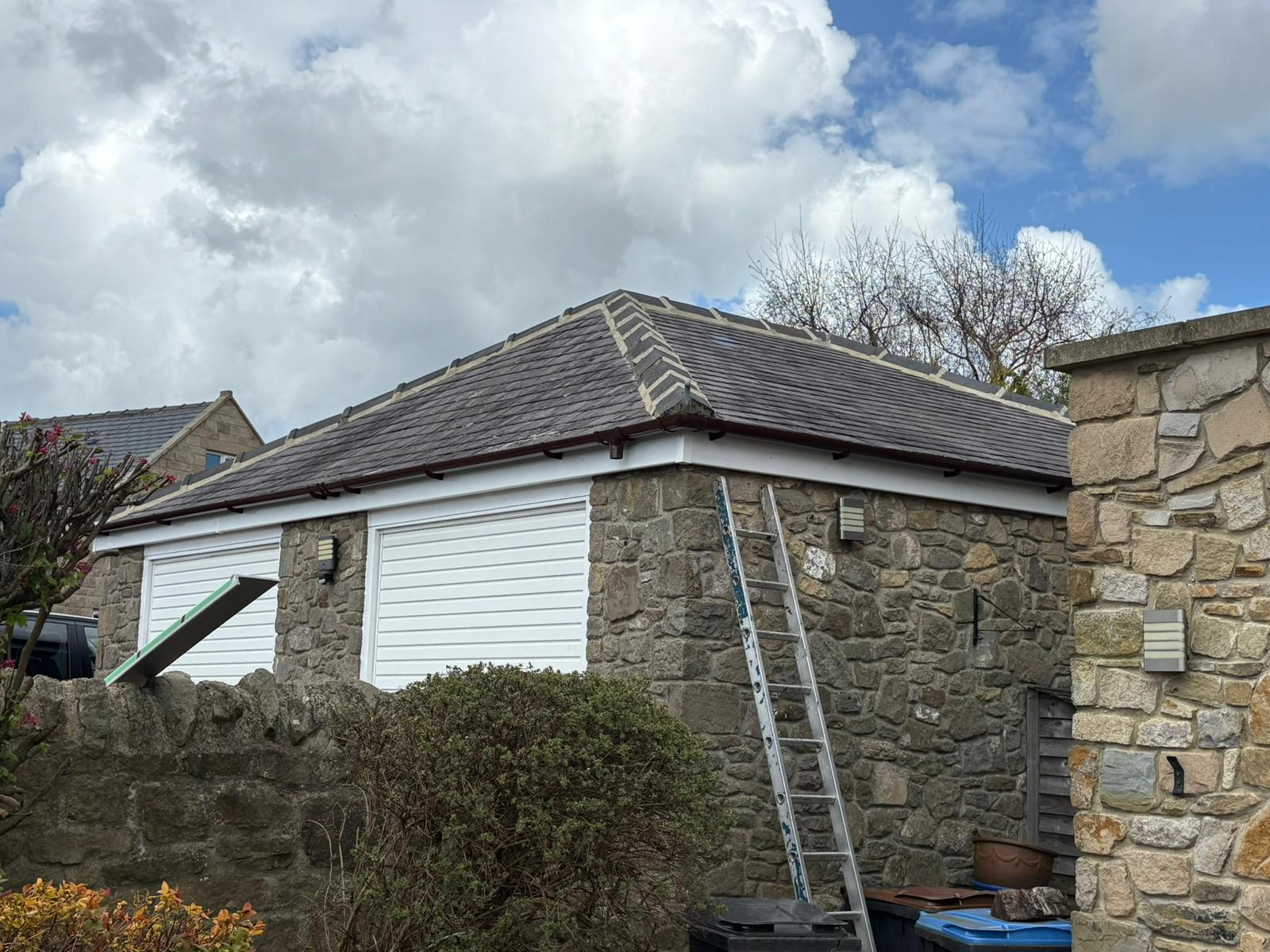
Repointing Specialists
Restore Your Brickwork's
Weatherproofing and Strength
Deteriorating mortar joints let water into your walls, cause frost damage, and undermine structural integrity. We restore them with expert repointing using the right mortar for your property — lime or cement — matched to your existing brickwork.
★ Lime & cement mortar specialists · Free surveys · Work guaranteed
Service Overview
What Is Repointing and When Is It Needed?
Repointing is the process of removing deteriorated mortar from the joints between bricks or stones and replacing it with fresh mortar. Over decades of exposure to rain, wind, frost, and temperature changes, mortar joints gradually erode, crack, and crumble. Once joints fail, water penetrates the wall, leading to damp, frost damage, and structural problems.
Repointing is most commonly needed on exposed walls, gable ends, chimney stacks, and boundary walls — any masonry that faces prevailing weather without shelter. Across County Durham, properties in elevated or exposed locations (such as Lanchester, parts of Durham, and rural areas) often need repointing sooner than sheltered urban properties.
Weather Shield Roofing provides expert repointing for residential properties across County Durham. We work with both lime mortar (appropriate for older, breathable constructions) and cement mortar (suitable for modern builds), selecting the right mix to match your existing joints in colour, texture, and composition.
Repointing is commonly carried out alongside chimney repairs and roof repairs, as the same exposure conditions that deteriorate mortar joints also affect roofing components. Combining these services in a single project is more cost-effective and causes less disruption.
Why It Matters
The Consequences of Ignoring Failed Mortar Joints
Failed mortar joints do more than look untidy. They actively compromise your property's weather resistance. Water enters through open joints, saturates the masonry, and causes a cascade of problems: penetrating damp on internal walls, frost-spalling of brick faces, efflorescence (white salt deposits), and in severe cases, structural instability as walls begin to bow or lean.
County Durham's climate is particularly punishing on mortar joints. Frequent freeze-thaw cycles cause trapped moisture to expand and contract repeatedly, widening cracks and accelerating deterioration. A joint that loses 5mm of mortar in a year might lose 15mm the following year as the damage accelerates.
One of the most damaging mistakes homeowners make is repointing old lime-mortar buildings with modern cement mortar. Cement mortar is harder and less permeable than lime, trapping moisture inside the masonry rather than allowing it to breathe. This trapped moisture causes the softer original bricks to spall and crumble — exactly the opposite of what repointing is meant to achieve. Using the correct mortar type is critical, and it's something we assess carefully on every project.
Ignoring the need for repointing doesn't save money — it shifts the cost. What would have been a straightforward repointing job becomes a masonry repair project involving brick replacement, damp treatment, and internal redecoration. Addressing mortar joints early is one of the most cost-effective maintenance steps a property owner can take.
How We Work
Our Repointing Process
Survey & Mortar Analysis
We inspect the masonry, assess joint condition, and determine the correct mortar type — lime or cement — based on the age and construction of your property.
Written Quote
A clear, itemised quote for the work, including the type of mortar, extent of repointing, and any access requirements. No hidden costs.
Joint Preparation
Failed mortar is raked out to a consistent depth (typically 15–20mm) using hand tools or careful mechanical methods. We avoid damaging the surrounding masonry.
Mortar Application
Fresh mortar is pressed firmly into each joint, ensuring full contact with the brick or stone faces. Joints are finished to match the existing profile — flush, weatherstruck, bucket-handle, or recessed.
Curing & Completion
Lime mortar requires careful curing — we protect fresh work from rain and frost during the initial setting period. Final inspection confirms consistent joint quality and clean brick faces.
Your Advantages
Benefits of Professional Repointing
Stop Water Penetration
Sound mortar joints are your wall's primary defence against driving rain. Repointing restores this barrier completely.
Prevent Frost Damage
Sealed joints prevent moisture entering the masonry, eliminating the freeze-thaw cycle that causes brick faces to spall and crumble.
Preserve Structural Integrity
Mortar joints bind your masonry together. Keeping them in good condition maintains the structural stability of walls, chimneys, and gable ends.
Avoid Expensive Repairs
Repointing is a fraction of the cost of replacing damaged bricks, treating penetrating damp, or stabilising a wall that's begun to move.
Improve Appearance
Fresh pointing transforms the appearance of brickwork, making the property look cared-for and well-maintained.
Correct Mortar Selection
We match the mortar type to your property's construction — lime for older buildings, cement for modern — preventing the damage caused by incompatible materials.
In-Depth Guide
Repointing Materials, Methods & Mortar Types
Lime Mortar
Lime mortar is the correct choice for properties built before approximately 1920 — and many built up to the 1940s. These buildings were designed to breathe: moisture moves through the porous masonry and evaporates from the surface. Lime mortar is softer and more permeable than cement, allowing this moisture movement to continue. We use Natural Hydraulic Lime (NHL) mortars in grades NHL 2, 3.5, or 5 depending on the exposure level of the wall. NHL 3.5 is the most common grade for general domestic repointing in County Durham.
Cement Mortar
Cement mortar (Portland cement mixed with sand) is appropriate for properties built from the mid-20th century onwards — typically houses with cavity wall construction and modern bricks designed to work with harder mortars. We mix cement mortars in ratios appropriate to the exposure conditions: typically 1:3 or 1:4 (cement to sand) for general repointing.
Colour Matching
Mortar colour has a significant impact on the appearance of finished brickwork. We match the sand colour, aggregate size, and cement shade to your existing mortar. For lime mortars, the sand selection is critical — local sands from the North East produce warm, natural tones that complement the stone and brick commonly found across County Durham.
Joint Profiles
The joint profile (finish) affects both appearance and weather performance. Common profiles include: flush (level with the brick face), weatherstruck (angled to shed water), bucket-handle (concave, created with a rounded tool), and recessed (set back from the brick face for a shadow effect). We match the profile to your existing joints unless you prefer a change in style.
Stonework Repointing
Stone buildings — common in rural County Durham and older parts of Durham city — require particular care when repointing. Stone joints are typically wider and deeper than brick joints, and the mortar must be compatible with the stone type. Sandstone, limestone, and granite all have different porosity and thermal characteristics. We select mortars specifically suited to the stone in each project.
Chimney & Gable End Repointing
Chimney stacks and gable ends are the most exposed masonry on any property and typically require repointing sooner than sheltered walls. We carry out targeted repointing of these high-exposure areas as standalone projects or as part of broader roof and chimney repair work.
Common Questions
Frequently Asked Questions
Related Services
Areas We Cover
- Repointing in Durham
- Repointing in Houghton le Spring
- Repointing in Chester-le-Street
- Repointing in Bowburn
- Repointing in Spennymoor
- Repointing in Ferryhill
- Repointing in Peterlee
- Repointing in Coxhoe
- Repointing in Lanchester
- Repointing in Newton Aycliffe
- Repointing in Bishop Auckland
- Repointing in Sedgefield
- Repointing in Shildon
- Repointing in Tudhoe
- Repointing in Coundon
- Repointing in Leeholme
- Repointing in Cornforth
- Repointing in Chilton
- Repointing in Trimdon
- Repointing in Fishburn
Ready to Protect Your Property?
Get a free, no-obligation estimate. We'll inspect your roof, explain exactly what's needed, and give you a clear price — before any work begins.
Most enquiries answered within hours · Free estimates · No hidden costs